The lighting features are also essential in a membrane structure application. Here we explained 3 main aspects affecting light characteristics of a membrane structure carport.
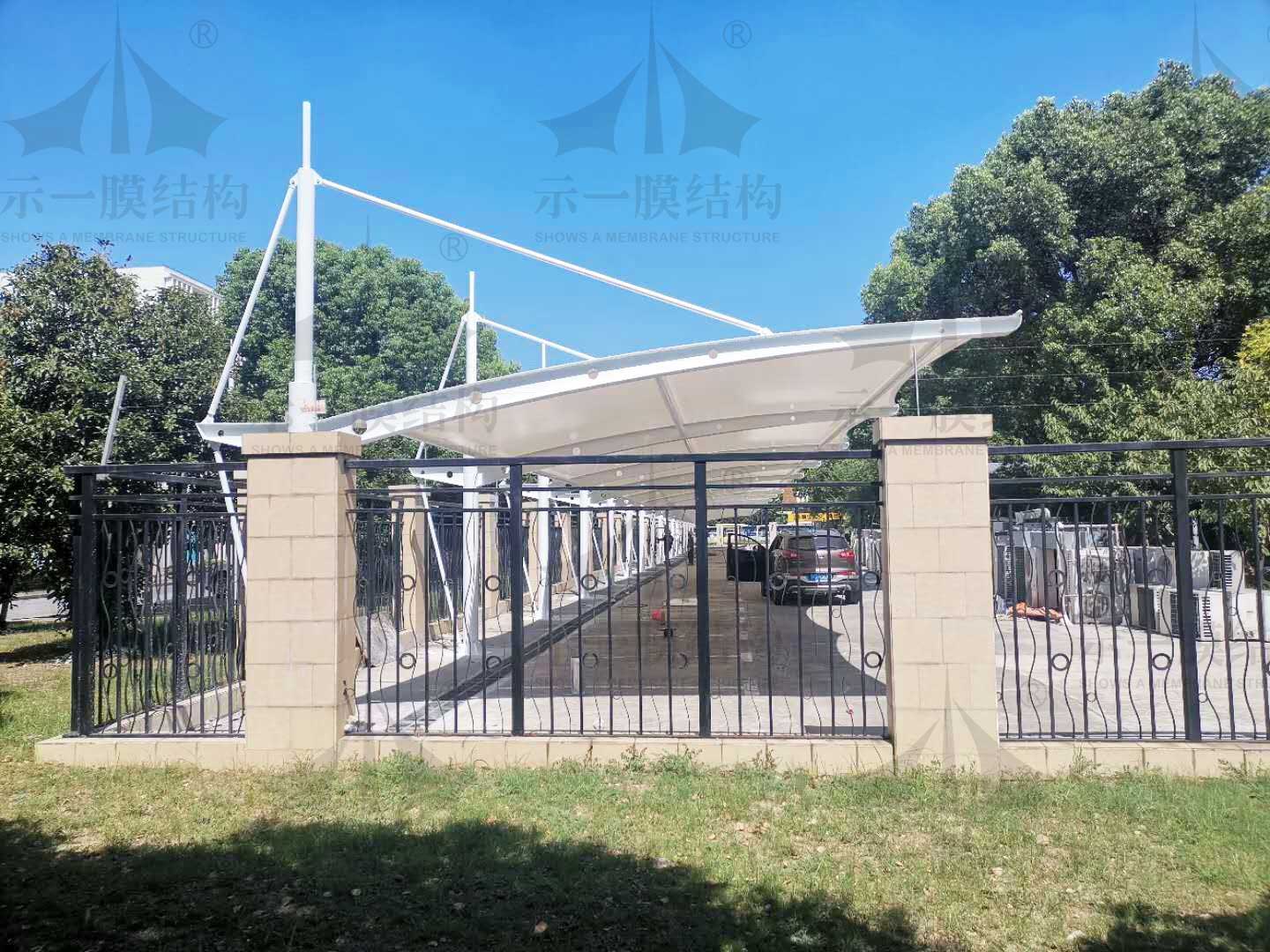
1. High daylighting coefficient
The sunlight shining on the roof is transmitted into the room in the form of diffused light. From the inside, the roof becomes a continuous bright side, whose intensity changes due to the relative position of the roof to the sun. The daylighting coefficient (that is, the ratio of the natural light intensity of the indoor and outdoor surfaces) of the tension film structure is generally as high as 10%; in traditional construction, the light can only enter the room through limited daylighting windows, and the daylighting coefficient is less than 3 %. Even in a cloudy day, the light level in the membrane structure room can meet the basic requirements of most activities.
2. No glare
Because the transmitted light and reflected light are diffuse light, probability rate of glare is reduced. However, we suggest considering the arrangement of the layout and shading, to avoid the glare caused by direct light.
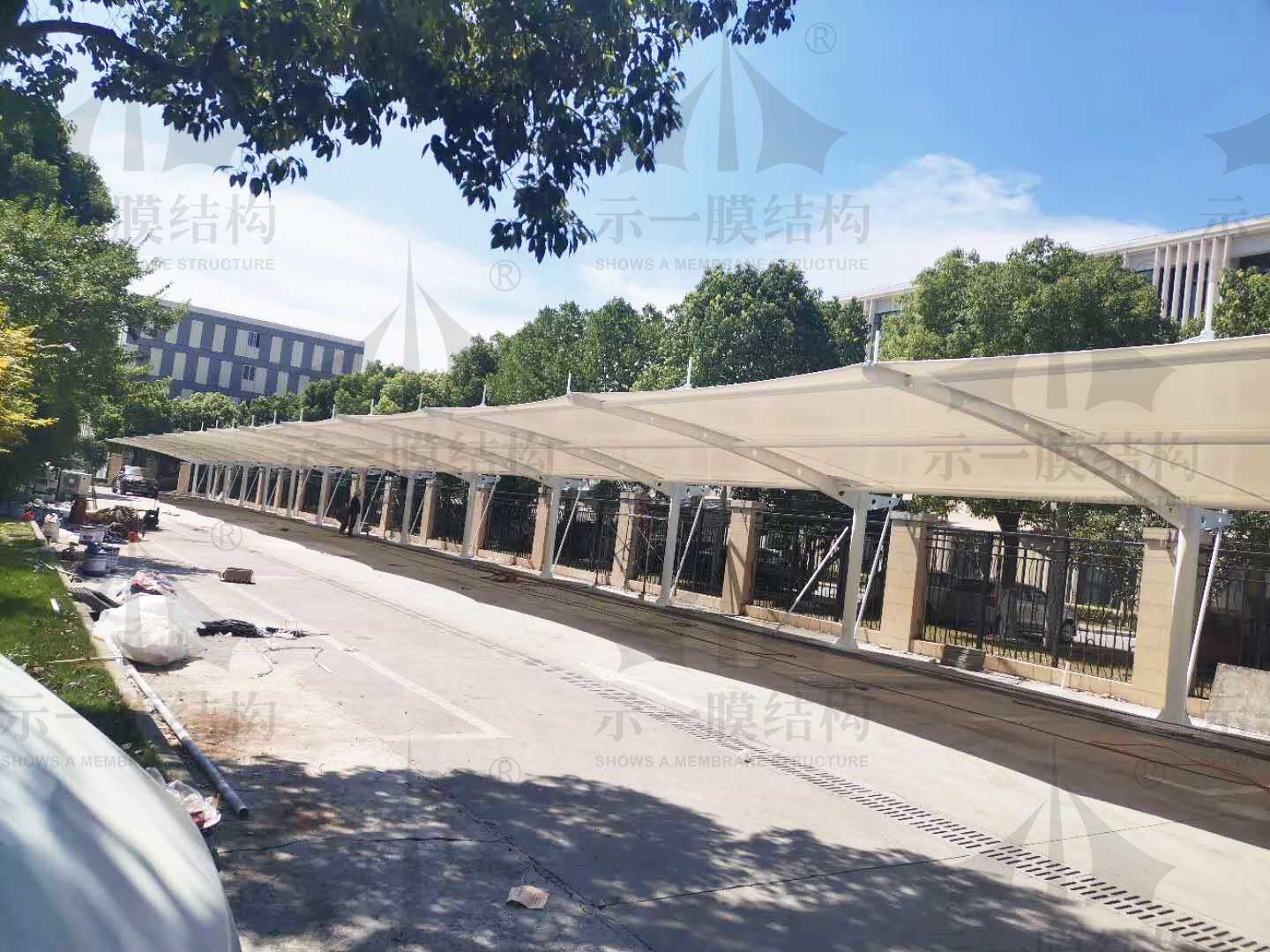
3. Good color
In the interior of the membrane structure carport, people will have a good color perception of white or off-white membrane materials, because these two colors show the characteristics of linear spectrum transmission of visible light. The degree of transmission increases with the wavelength of the transmitted light, which makes the transmitted light slightly warmer than the incident light. The transmission spectrum is different from the fiber and its characteristics, the thickness of the coating, and the additional surface layer. The manufacturer should give more specific information. The transmission spectrum of PTFE-coated glass fiber membranes compared to PVC-coated polyester fiber membranes.
The original text is compiled from Shanghai Shows A Membrane Structure Co., Ltd.
Please specify



 沪公网安备 31011802003675号